August 11,2026
Your gearbox was designed for high radial loads and limited space, making full complement bearings the logical choice. Months of reliable operation followed. Then, during a routine production run, you noticed an unusual temperature rise. The housing was too hot to touch. Vibration increased. Within hours, the bearing seized, damaging the shaft and halting production.
This is the classic scenario of full complement bearing overheating. For engineers and procurement specialists in heavy machinery, construction equipment, and gearbox applications, this failure mode represents a costly lesson in bearing selection. The mistake is understandable: full complement bearings offer exceptional load capacity, but they are generally less suitable for high-speed continuous rotation than comparable caged designs. Misapplying them in this way can trigger a chain of increasing friction, heat generation, lubricant degradation and, in severe cases, bearing seizure.
For continuous-rotation applications, bearing selection should consider radial load, RPM, duty cycle, lubrication, operating temperature, available space and heat dissipation. Do not select a full complement bearing based on load rating alone.
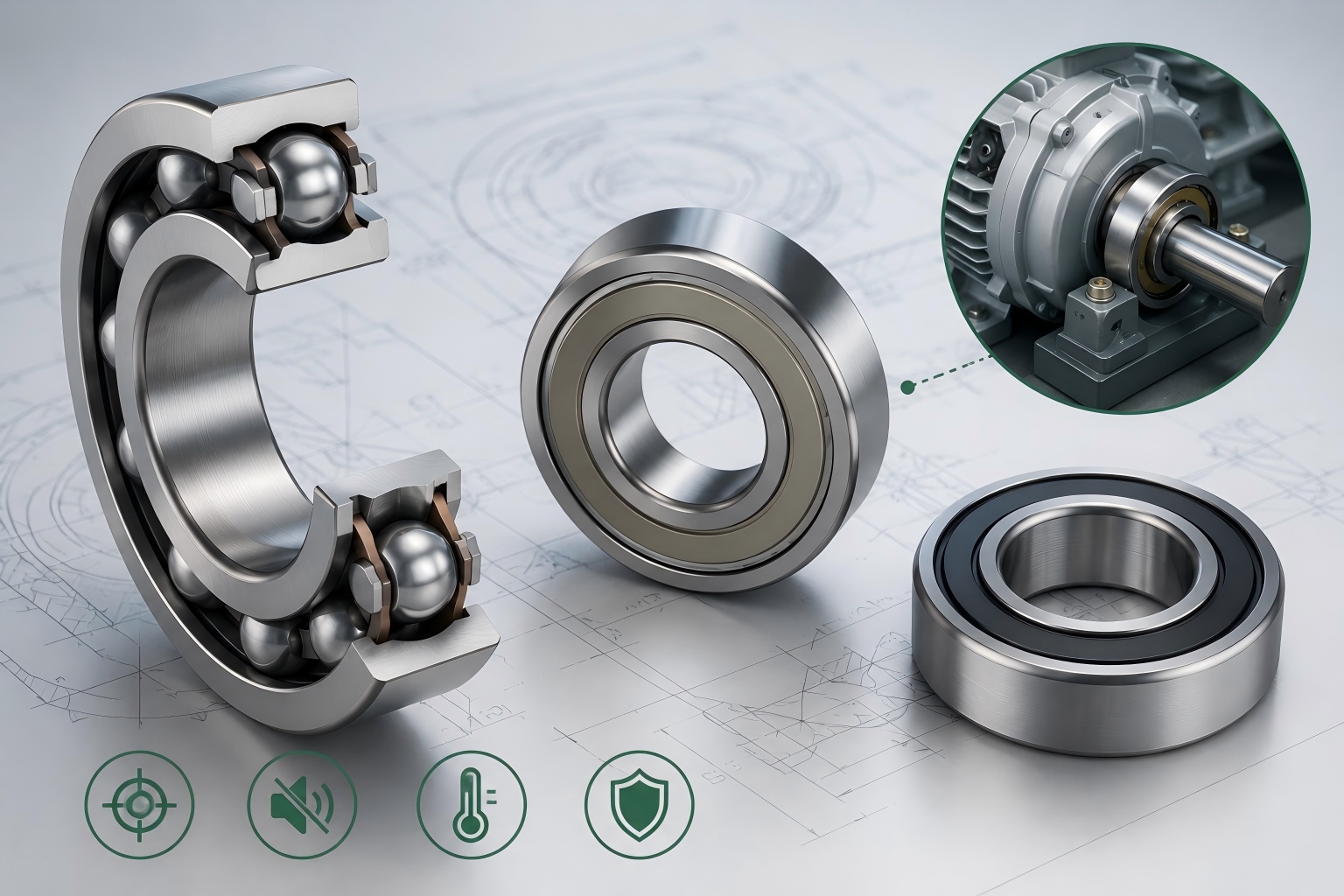
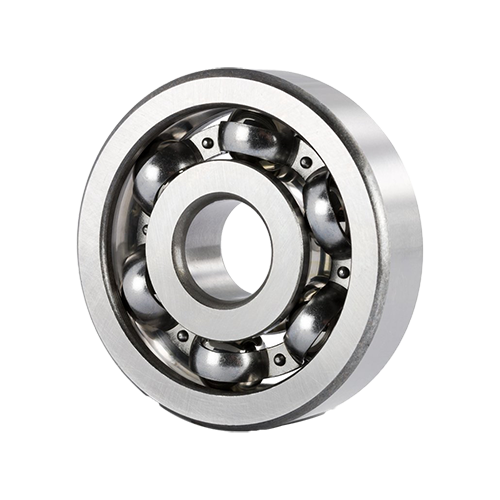
Full complement bearings are characterized by the maximum possible number of rolling elements, achieved by eliminating the cage. This design provides significant advantages for specific applications, but also introduces critical limitations.
Because there is no cage, more rollers or balls can be fitted into the same space. This directly translates to higher radial load capacity and increased rigidity—ideal for supporting heavy loads in compact assemblies. Full complement bearings excel where high radial load capacity is the primary requirement.
The absence of a cage means the rolling elements contact each other directly. The increased number of rolling elements can increase load-carrying capacity, but direct roller-to-roller contact also increases friction and skidding-related losses. Frictional torque is substantially greater for full complement bearings compared to caged designs. This friction, combined with reduced lubrication flow between the closely packed elements, creates intense heat generation during rotation. At higher speeds, this heat cannot be dissipated effectively, leading directly to thermal instability and bearing failure.
The physics are unforgiving: the high friction inherent in full complement designs generates heat. If the bearing is continuously rotated, this heat accumulates faster than it can be conducted away through the housing or removed by lubrication.
Bearing selection is not determined by load capacity alone. The combination of radial load, rotational speed, lubrication method, duty cycle and heat dissipation determines whether a full complement design is suitable. In high-speed or continuous-duty applications, the limitations of roller-to-roller contact become the dominant factor.

The DN value, commonly used as a speed-related indicator based on bore diameter and rotational speed, can be more restrictive for full complement designs because of their higher friction and heat generation. At elevated speeds, the increased friction and heat generation can reduce the available operating margin and may push the bearing beyond its allowable thermal limits.
Sustained operation at elevated temperatures can accelerate lubricant degradation and reduce bearing service life. For many applications, temperatures around 125°C and above require careful evaluation of the bearing material, lubricant, seals, load and speed. Once the lubricant film breaks down at elevated temperature, metal-to-metal contact increases, friction can rise rapidly, and the bearing may enter a state of thermal runaway.
Yes, some full complement bearings can operate under continuous rotation, but their allowable speed is generally lower than comparable caged designs. Suitability depends on bearing geometry, load, RPM, lubrication, temperature and duty cycle. For high-speed continuous rotation, a caged bearing is often the safer choice.
The tightly packed rolling elements in a full complement bearing create a significant challenge for lubrication. The narrow gaps between rollers limit oil or grease flow, reducing the lubricant's ability to both separate surfaces and carry away heat.
Full complement bearings are more sensitive to lubrication distribution than caged designs. Overheating can be accelerated by:
Insufficient lubrication
Over-lubrication
Lubricant contamination
Improper grease selection for operating temperature
Loss of lubricant viscosity under heat
The right lubricant selection is critical. In high-temperature or continuous rotation applications, synthetic oils with higher thermal stability may be required.
Understanding the correct application window is key to preventing full complement bearing overheating. These bearings are the right choice for:
High-load, low-speed applications: Rolling mills, heavy gear drives, and construction machinery operate at lower speeds where the load-carrying capacity justifies the design.
Oscillating or slow-rotation applications: Articulated joints and mechanisms with limited rotation benefit from high load capacity without the risk of continuous heat buildup.
Space-constrained designs: When bearing size is critical, the maximum roller count in a full complement bearing can meet load demands that a caged bearing of the same size cannot.
High-speed or continuous-duty operation is required
Heat dissipation is limited
Lubricant circulation is critical
Operating temperature is already high
Low friction is a primary requirement
Recognizing the symptoms of overheating enables timely intervention before catastrophic failure occurs.
Possible Causes:
Excessive rotational speed
Insufficient lubrication
Excessive grease fill
High radial load beyond design limits
Possible Causes:
Roller-to-roller contact damage
Surface wear or spalling
Lubricant degradation
Contamination ingress
Possible Causes:
Thermal runaway
Lubricant film breakdown
Excessive friction
Raceway damage
If the bearing operates under continuous rotation, the solution may not be a different lubricant—it may require a different bearing architecture.
| Selection Factor | Full Complement Bearing | Caged Bearing |
|---|---|---|
| Radial Load Capacity | Very High | High |
| Continuous Rotation | Limited | Recommended |
| High-Speed Operation | Limited | Better |
| Friction | Higher | Lower |
| Lubrication Flow | Restricted | Better |
| Heat Dissipation | More challenging | Better |
| Oscillating Motion | Excellent | Application dependent |
| Heavy Load / Low Speed | Excellent | Good |
If load capacity is the priority but rotational speed is relatively low, a full complement design may be appropriate. If continuous speed, lubrication flow and thermal stability are more important, a caged design is often the better starting point.
While full complement bearings have limitations, technological advancements offer alternatives.
Some specialized designs use polymer or resin separators between adjacent rolling elements to reduce roller-to-roller contact while retaining a high rolling-element count. This approach can reduce friction and heat generation and may expand the usable speed range compared with conventional full complement designs.
Where higher speeds are required, caged needle bearings are often preferred for continuous-rotation applications where higher speed, lower friction and better lubricant circulation are required. Their design promotes better lubrication flow, lower friction, and efficient heat dissipation.
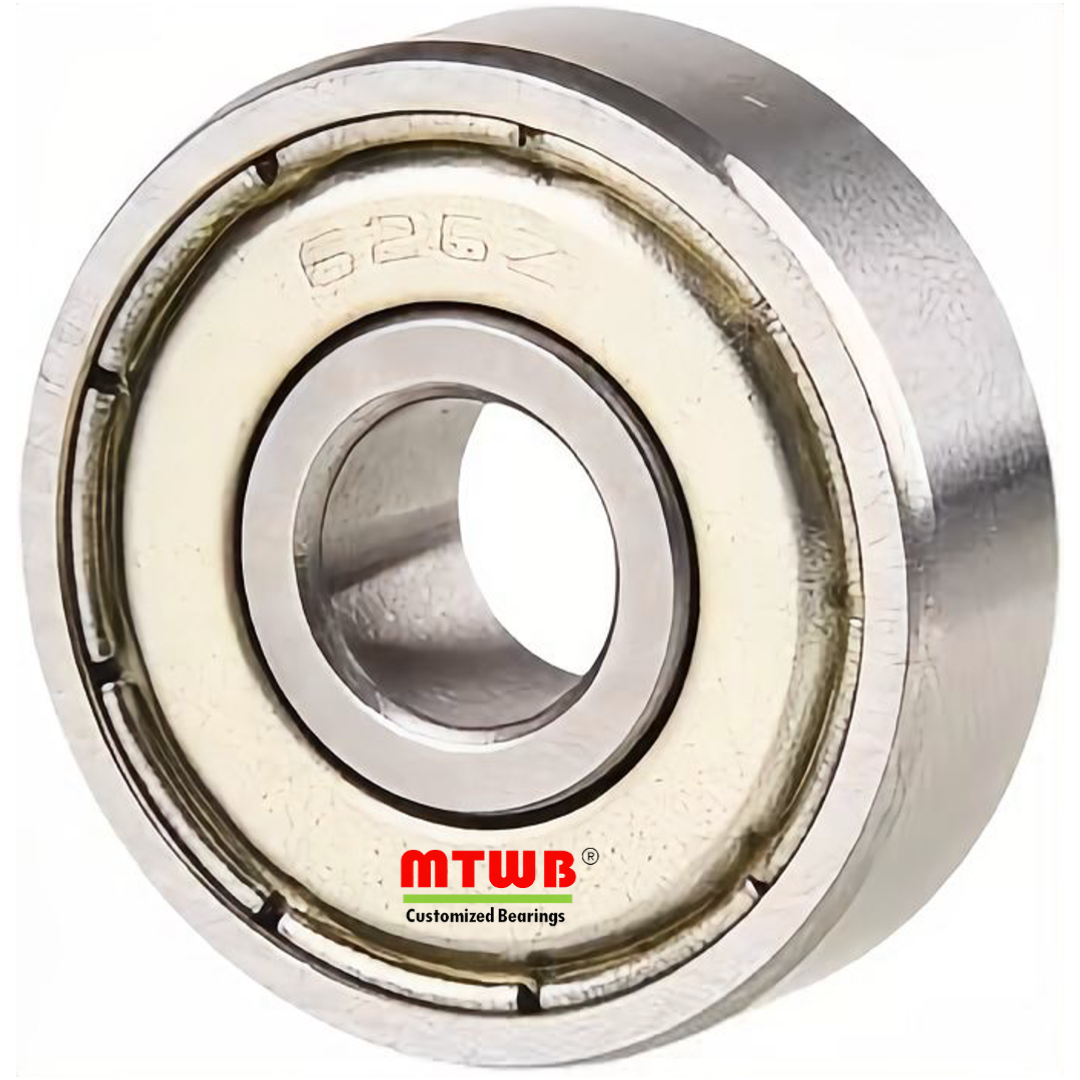
MTWB provides customized bearing solutions for a wide range of applications. As a specialized manufacturer with experience in non-standard bearing development, MTWB offers:
Non-standard bearing development
Custom dimensions
Material selection
Lubrication customization
Prototype and sample evaluation
OEM production
Application-based bearing selection
Send us your bearing size, radial load, RPM, operating temperature, lubrication method and duty cycle. Our engineers can evaluate whether a full complement, caged or customized bearing design is suitable for your application.
Full complement bearing overheating is a preventable problem rooted in a mismatch between bearing design and application requirements. The exceptional load capacity of these bearings comes with limitations on speed and thermal performance. By understanding the fundamental trade-off between roller count and friction, and by applying full complement bearings in their intended scenarios—high loads with slow or oscillating motion—engineers can avoid costly failures. For continuous rotation, exploring caged bearings or advanced separator designs is essential for achieving reliable, long-term service life.
Need Help Choosing Between Full Complement and Caged Bearings?
If your application combines high radial load with continuous rotation, send MTWB your:
Bearing dimensions
Radial and axial load
Operating speed (RPM)
Operating temperature
Lubrication method
Duty cycle
Available installation space
Our engineering team can evaluate whether a full complement, caged or customized bearing design is better suited to your application.
Contact MTWB for application-based bearing selection, OEM development or a customized bearing solution.